Before You Automate: How to Prepare Your Automotive or Powersports Facility
Although rapid growth can be a positive sign for an automotive dealership, powersports facility, service center, or parts warehouse, it can also create longer wait times, higher operating costs, and crowded work areas. When parts are demanded, it can cause insufficiency. If this sounds familiar, it may be time to consider automation. Autonomous mobile robots (AMRs) can help facilities move parts, tools, tires, supplies, and other materials with less manual effort. Nevertheless, a facility has to understand its current state and prepare its layout, employees, and workflows.
Is Your Facility Ready for Automation?
Automation should be used to solve a specific problem in the facility. Begin by reviewing how materials currently flow through your facility. Look for repetitive tasks, frequent delays, safety concerns, and areas where employees spend time transporting materials instead of completing higher-value work.
Common signs may include:
- Technicians frequently waiting for parts or supplies
- Employees making repeated trips to service bays
- Longer service turnaround times
- Inventory errors or misplaced components
- Rising labor and operating costs
- Inefficient cart movement and corded aisles
- Employees consistently carrying or transporting heavy materials
- Difficulty keeping up during seasonal demand
Powersports businesses may experience distress during seasons with higher demand, and in response, automation can help facilities handle busier periods without entirely depending on manual labor.
Identifying the Right Workflow
Before selecting an automation solution, identify exactly what you want to improve. Review where each material starts, where it needs to go, how often it moves, how much it weights, and how long the trip currently takes; consider whether employees must stop their primary responsibilities to complete the movement.
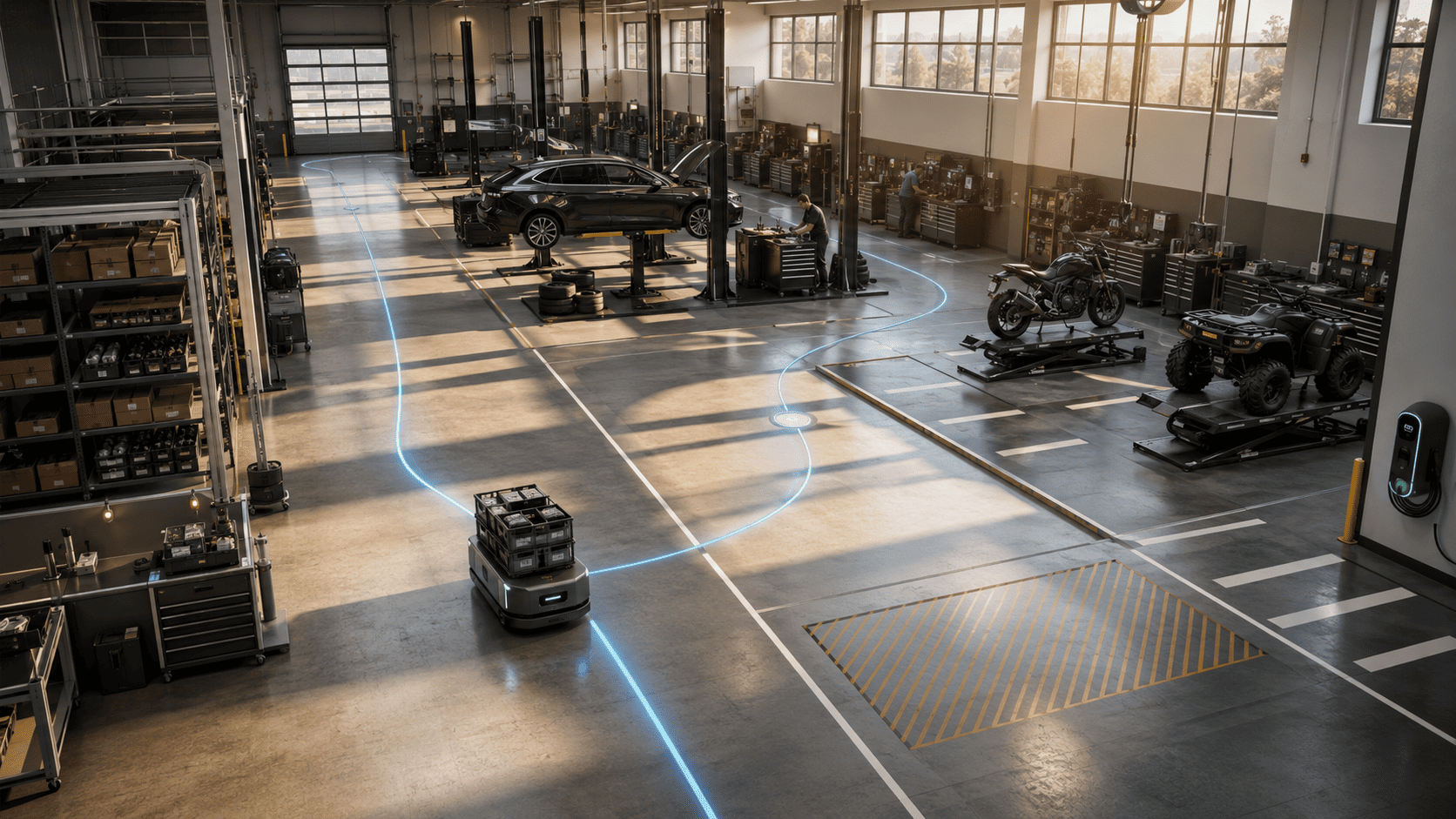
For example, a dealership may want to improve parts delivery from the parts department to service bays. A powersports facility may need a better way to move accessories, tires, batteries, boxed components, or special-order parts from storage to technicians. A parts warehouse may need help moving bins, cartons, or inventory between receiving, storage, picking, and shipping areas.
The best automation project usually starts with one clear workflow. This makes it easier to test the process, measure results, and train employees before expanding automation into other departments.
Other possible workflows include:
- Delivering technician tools, commonly used shop supplies, oil, filters, batteries, and fluids
- Transporting motorcycle, ATV, UTV, personal watercraft, and marine parts
- Moving materials from the warehouse to the service department
- Returning unused parts or cores to the parts counter
- Delivering accessories for vehicle or powersports equipment installations
Review Your Facility Layout
Facility layout also plays an important role in determining whether an AMR can operate safely and reliably. Aisle widths, doors, ramps, floor conditions, service-bay traffic, customer areas, charging locations, and Wi-Fi coverage should all be taken into consideration Travel paths should be clear, safe, and wide enough for the robot and its load. Identify cracks, steep transitions, slippery surfaces, cords, hoses, or other obstacles that could affect movement.
For automotive and powersports facilities, it is especially important to review how the robot will move around technicians, lifts, service equipment, parked vehicles, motorcycles, ATVs, UTVs, and customer-facing areas.
Travel paths should be clear, safe, and wide enough for both he robot and its load. The facility should also evaluate:
- Charging or battery locations
- Wi-Fi and network coverage
- Service-bay traffic
- Customer waiting and retail areas
- Shipping and receiving zones
- Parts shelving and storage racks
- Fire exits and emergency routes
- Vehicle entrances and overhead doors
- Ramps, transitions, or elevators
Facilities should also consider when the robot will carry open containers, boxed parts, fluids, tires, batteries, tools, or unusually shaped components. The attachment or carrying platform must be appropriate for the material being transported.
Set Clear Goals and Measurements
Clear goals will make it easier to choose an automation system and determine whether it is producing results.
A facility might want to reduce the time technicians spend waiting for parts, decrease the number of employee trips between departments, improve service turnaround time, or reduce the physical strain caused by moving tires and batteries. Before implementation, record current performance; measure the average delivery time, number of trips, labor hours spent moving materials, technician wait time, and frequency of errors. These benchmarks can later be compared with results after automation is introduced.
Return on investment should include more than direct labor savings. Facilities should also consider improved technician productivity, faster service completion, reduced injuries, fewer damaged parts, better consistency, and the ability to handle growth without adding transportation-related labor.
Prepare Employees for the Change
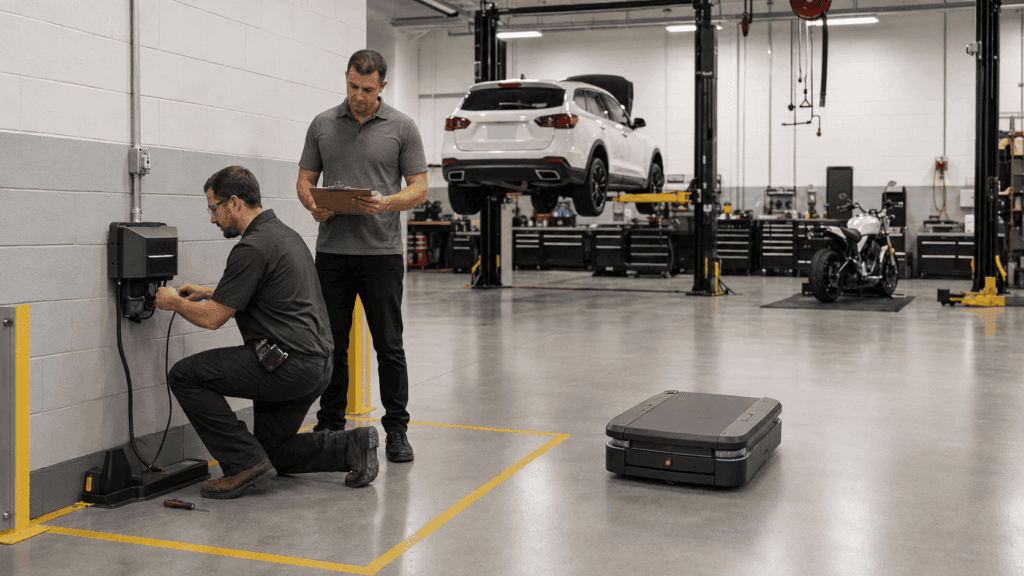
Employee preparation is equally important, and they should understand the robots early on. they should also be trained to operate safely alongside the new technology. Explain what the robot will do, which routes it will use, and how employees will interact with it. Automation should be presented as a tool that reduces unnecessary walking, pushing, lifting, and waiting—not as technology being introduced without employee input.
The training should cover safe interaction, loading and unloading procedures, emergency stops, charging procedures, and route awareness. They should also understand how responsibilities may change once transportation tasks are reduced.
Start with One Focused Workflow
A facility doesn’t need to automate everything at once. Starting with one focused workflow makes it easier to test performance and measure results. Once the system works reliably, the facility can expand automation into additional departments. With the right preparation, automation can reduce delays, improve safety, lower costs, and help your facility handle future growth smoother.
A dealership might begin with scheduled parts deliveries from the parts counter to a group of service bays. A powersports distributor may begin by moving components from warehouse storage to order processing stations. A tire operator might begin with movement between tire storage and the mounting area.
Once the first workflow operates reliably, the facility can evaluate additional routes, departments, attachments, or applications. Starting small reduces risk.
How K&L and ShopProBot Work Together
K&L Supply helps automotive and powersports businesses equip their service departments, parts departments, and warehouses with products to operate efficiently. Because K&L has experience serving dealerships, repair shops, and powersports facilities, K&L understands the everyday challenges in moving parts, tires, batteries, and other supplies in a busy facility.
ShopProBot supports these operations though repetitive material-handling tasks. The robot can transport parts and supplies between the warehouse, parts counter, service bays, and other designated locations. The combination of K&L Supply’s knowledge of automotive and powersports industry with ShopProBot’s delivery capabilities can reduce walking, shorten times, and improve safety.
Related Reading: Learn more about how to get your business ready for automation in ShopProBot’s guide: How to Know When Your Automotive or Powersports Business Is Ready for AMR Automation
Frequently Asked Questions
1. How do I prepare my shop for AMR automation?
Start by reviewing how parts, tools, tires, supplies, and other materials move through your facility each day. Look for repeated trips, long wait times, crowded aisles, safety concerns, and areas where employees spend too much time pushing carts or carrying materials. Your shop should also review aisle width, floor conditions, doors, ramps, charging locations, Wi-Fi coverage, and employee training needs before adding AMRs.
2. Can AMRs work in automotive service bays?
Yes, AMRs can work in automotive service areas when the workflow and travel paths are planned correctly. They can help move parts, tools, supplies, tires, batteries, and other materials between the parts department, warehouse, and service bays. Before using AMRs, the facility should review technician traffic, lifts, parked vehicles, carts, hoses, customer areas, and other obstacles that may affect safe robot movement.
3. What workflow should a dealership automate first?
A dealership should start with one simple, repeated workflow. A good first workflow may be parts delivery from the parts counter to service bays, tire movement from storage to the mounting area, or transporting commonly used supplies to technicians. Starting small makes it easier to test the process, train employees, measure results, and expand automation later.
4. What should powersports facilities check before using AMRs?
Powersports facilities should review how motorcycles, ATVs, UTVs, personal watercraft, marine parts, accessories, tires, batteries, and boxed components move through the building. They should also check aisle space, storage areas, service-bay traffic, customer-facing areas, floor conditions, ramps, doors, and seasonal demand. The goal is to make sure the AMR has a safe and clear path while carrying the right type of load.
5. Do AMRs replace employees?
AMRs are not meant to replace skilled employees. They are designed to support employees by reducing repetitive walking, pushing, carrying, and waiting. When AMRs handle routine material movement, technicians, parts employees, and warehouse staff can spend more time on higher-value work such as service, repair, inventory accuracy, customer support, and order fulfillment.
6. How do K&L Supply and ShopProBot work together?
K&L Supply understands the needs of automotive and powersports businesses, including service departments, parts departments, warehouses, and shop equipment needs. ShopProBot supports these operations with AMR solutions that can help move parts, tools, supplies, tires, and materials between departments. Together, K&L Supply and ShopProBot help businesses prepare their facility, improve workflow, reduce unnecessary walking, and explore practical automation solutions for future growth.