
7 Signs Your Service Department Is Ready for Workflow Automation
Service department workflow automation can help automotive dealerships, powersports dealers, repair shops, and service centers reduce delays and keep work moving more consistently. A busy service department is a good sign, but growth can also expose weak points in the workflow. Repair orders may sit too long before work begins. Technicians may wait for updates, approvals, tools, or parts. Service advisors may spend too much time checking job status. Bays may look full, but not every job is moving forward.
For automotive dealerships, powersports dealers, repair shops, and service centers, the problem is not always the team. Many times, the problem is the process.
Workflow automation helps a service department move work through the shop in a more organized and consistent way. This can include better job tracking, clearer communication, improved bay flow, standardized work areas, and automation tools that support daily operations.
Here are seven signs your service department may be ready for workflow automation.
1. Repair Orders Are Delayed Before Work Begins
A customer may already be checked in, but the repair order is not ready for the technician. The team may still be waiting for approval, notes, inspection details, or job assignment.
When jobs lose time before service work even starts, the department needs a clearer process. Workflow automation can help the team see where each repair order stands and what step is holding it back.
2. Service Bays Are Full, But Work Is Not Moving
A full shop does not always mean an efficient shop. Some vehicles, motorcycles, ATVs, UTVs, or equipment may be sitting in bays while the team waits for parts, approval, or the next step.
When bays are tied up by stalled jobs, the department has less room for new work. Better workflow tracking can help managers see which jobs are active, which are waiting, and which bays can be used more effectively.
3. Technicians Spend Too Much Time on Non-Repair Tasks
Technicians should spend most of their time diagnosing, repairing, inspecting, and completing service work. But in many shops, they also spend time looking for information, checking job status, asking for updates, or searching for tools and supplies.
When skilled employees spend too much time away from repair work, productivity drops. Workflow automation can help reduce unnecessary interruptions and keep technicians focused on higher-value work.
4. Communication Between Service, Parts, and Advisors Is Not Clear
Service departments depend on strong communication. If the advisor, technician, and parts department do not have the same information, delays happen quickly.
A technician may be waiting for parts. The parts team may be waiting for confirmation. The advisor may not know the job status. The customer may be waiting for an update.
Workflow automation can create a clearer view of each job, so the team spends less time asking for updates and more time moving work forward.
5. Customers Ask for Updates Before Your Team Has Answers
Customer communication becomes harder when job status is not easy to see. If a service advisor has to walk to the shop, check with the technician, or call the parts department before giving an answer, the process is too manual.
Better workflow visibility helps advisors respond faster and with more confidence. This can improve the customer experience and reduce pressure on the service desk.
6. Tools, Equipment, and Work Areas Are Not Organized Around the Workflow
Workflow is not only digital. The physical shop setup matters too.
If tools, lifts, tire equipment, diagnostic tools, parts staging areas, and supplies are not placed where the work happens, employees lose time moving around the facility.
This is where K&L Supply can support service departments. The right equipment, layout, and work area setup can help shops reduce wasted movement, improve safety, and prepare for future automation.
7. Managers Cannot Clearly See Where Time Is Being Lost
A service manager may know the shop feels backed up, but not know exactly why. The delay may be at check-in, dispatch, customer approval, parts availability, technician assignment, bay usage, or final review.
Without clear visibility, it is difficult to fix the right problem. Workflow automation helps managers identify bottlenecks and make better decisions based on real shop activity.
Start with Workflow Problem
Workflow automation does not need to start with a full shop redesign. The best first step is to identify one process that slows the team down.
That could be repair order tracking, service-to-parts communication, bay usage, technician updates, customer communication, or work area organization. Once one process improves, the shop can continue building a better workflow step by step.
How K&L Supply and ShopProBot Fit Together
K&L Supply helps automotive and powersports businesses improve the physical side of service operations, including shop equipment, service bay setup, lift planning, tire service areas, tool organization, and workflow readiness.
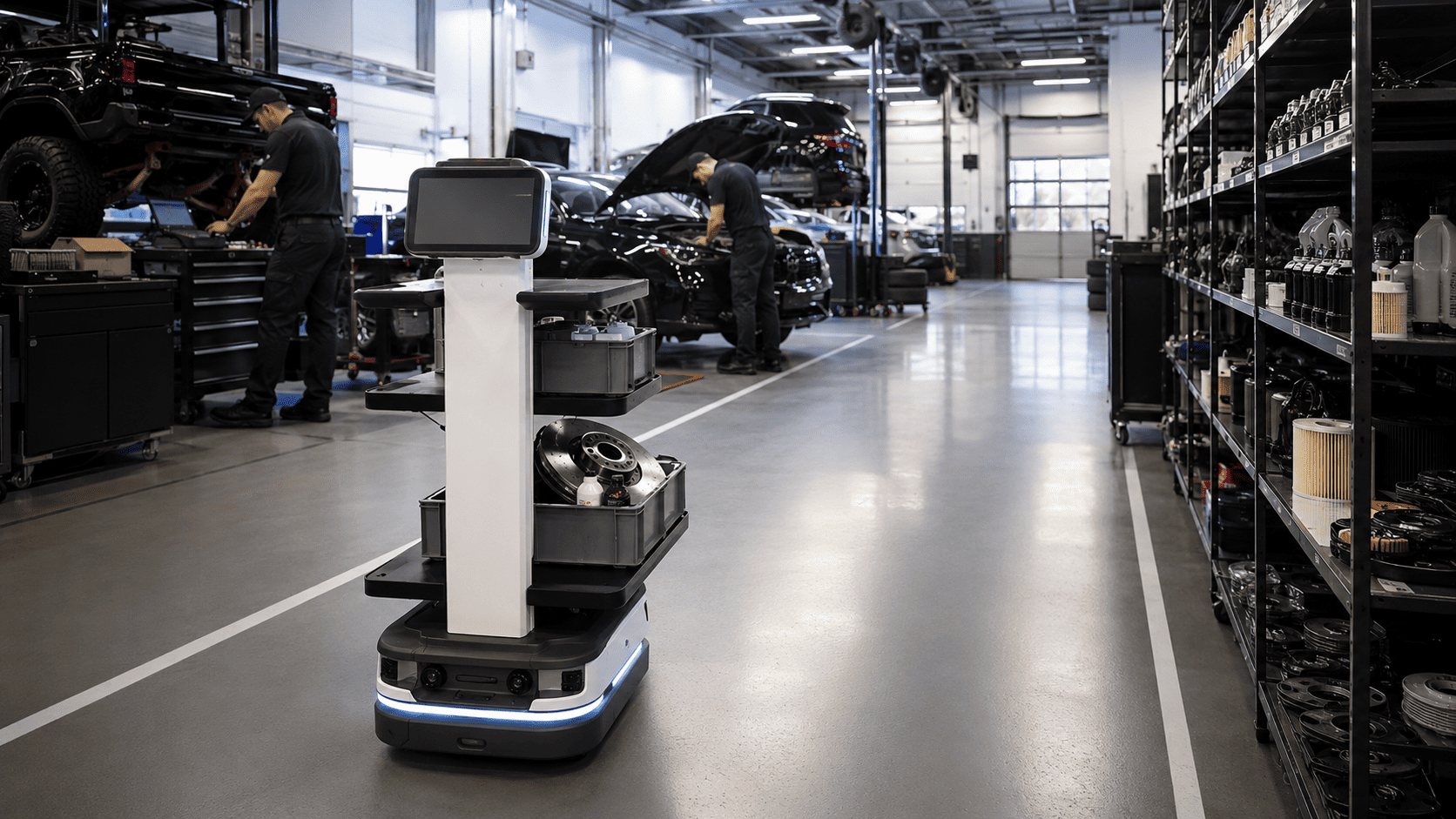
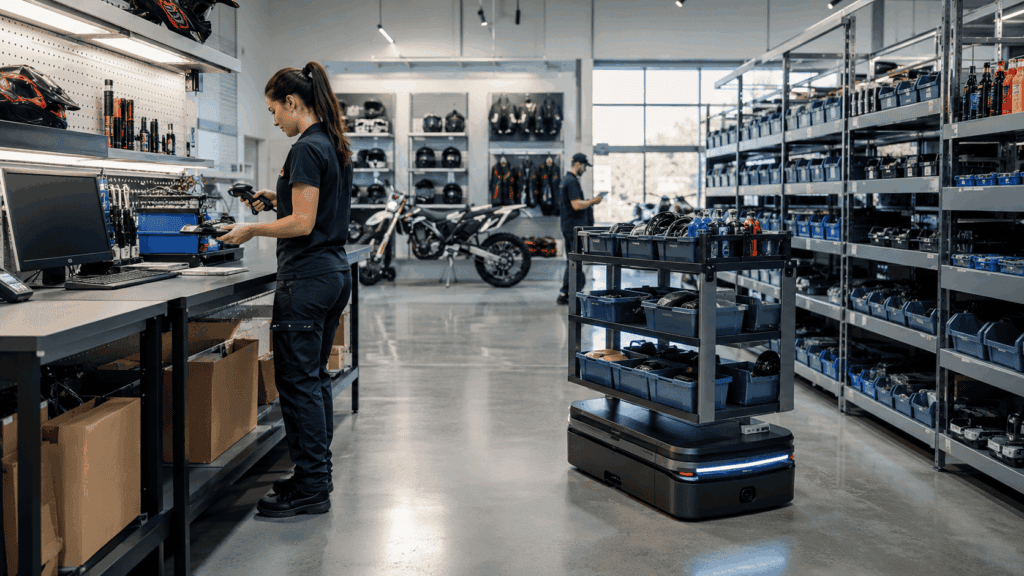
When workflow problems are connected to moving parts, tires, tools, supplies, batteries, accessories, or inventory between departments, ShopProBot can support the next step with AMR automation.
For a deeper look at material movement automation, read ShopProBot’s guide: How to Know When to Automate Material Movement in Your Automotive or Powersports Shop.
Key Takeaways
Service department workflow problems often start small. A job waits too long. A technician needs an update. A bay is tied up. A customer asks for a status check. A manager cannot see where the delay is happening.
Over time, these small delays add up.
Workflow automation helps service departments become more organized, more visible, and more efficient. For automotive and powersports businesses, the goal is not to automate everything at once. The goal is to find where time is being lost and improve one workflow at a time.
Common Questions
1. What is service department workflow automation?
Service department workflow automation uses better systems, tools, equipment planning, and technology to help repair orders, technicians, parts, approvals, and customer updates move through the shop more efficiently.
2. How do I know if my service department is ready for automation?
Your service department may be ready if repair orders are delayed, bays are full but work is not moving, communication is unclear, or managers cannot easily see where the workflow slows down.
3. Does workflow automation replace technicians?
No. Workflow automation helps technicians by reducing delays, interruptions, and unnecessary non-repair tasks. The goal is to help technicians spend more time on skilled service work.
4. Does workflow automation require a full shop redesign?
Not always. Many shops can start with one improvement, such as better job tracking, clearer communication, more organized work areas, or improved parts and service handoffs.
5. When should a shop consider AMR automation?
A shop should consider AMR automation when workflow delays are caused by repeated movement of parts, tires, tools, supplies, batteries, accessories, or inventory between departments.
Ready to Explore AMR Solutions?
K&L Supply and ShopProBot help businesses find practical, scalable robot solutions for real-world operations. Whether you need a cleaning for your shop floor, a high-capacity robot for your warehouse, or a specialized service robot for customer delivery, we have the technology to fit your budget and facility layout.
Talk to a ShopProBot AMR Specialist Today to request a custom quote, view product specifications, or schedule a virtual live demo.