How AGVs and AMRs Can Improve Material Movement in Your Shop
Automated Guided Vehicles and Autonomous Mobile Robots can both help businesses move parts, tools, tires, bins, supplies, and other materials without a human driver. However, the way they navigate and operate is very different.
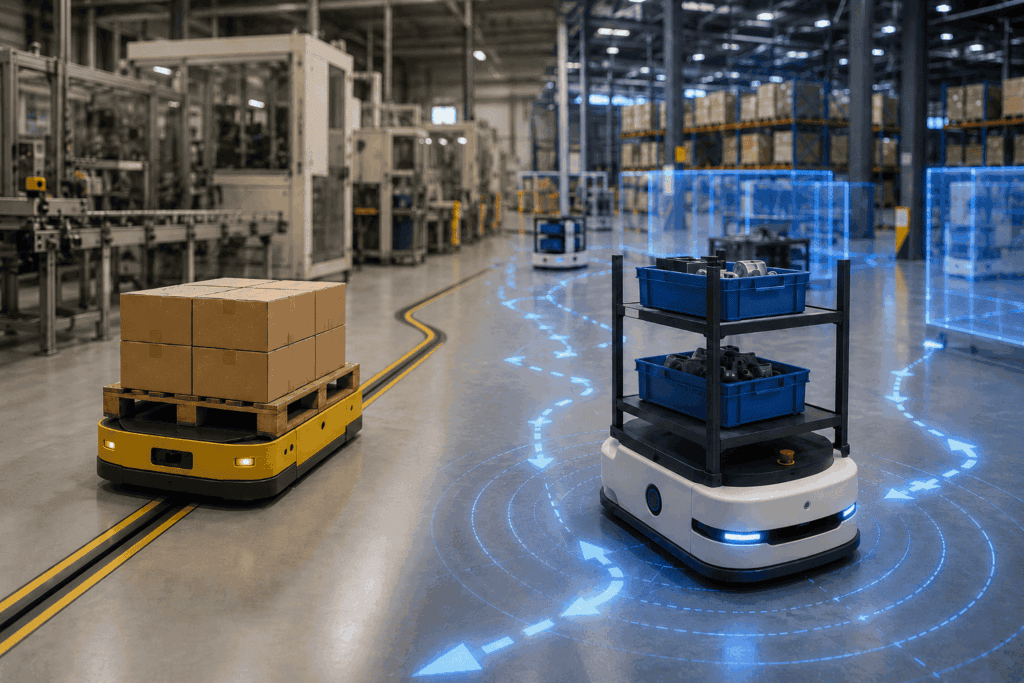
An Automated Guided Vehicle, or AGV, follows a predetermined route using guidance systems such as magnetic tape, floor markers, wires, QR codes, or tracks. AGVs are generally best suited for stable environments where the pickup point, delivery point, and travel path remain the same.
An Autonomous Mobile Robot, or AMR, uses sensors, cameras, mapping technology, and software to navigate more independently. It can adjust its route, respond to obstacles, and support changing workflows without requiring permanent tracks or major floor modifications.
For automotive shops, powersports businesses, parts departments, warehouses, and service operations, choosing between an AGV and an AMR depends on the facility layout, traffic patterns, materials being transported, and how frequently workflows change.
Read the complete ShopProBot guide to compare AGVs and AMRs, understand when each option makes sense, and learn how mobile robots can reduce repetitive walking and material-handling tasks.
Read the full guide: AGV vs. AMR: Which Robot Is Better for Your Shop?
ShopProBot, a K&L Supply company, helps automotive, powersports, warehouse, and industrial businesses evaluate mobile robotic solutions for moving materials more safely and efficiently.
Visit ShopProBot to learn more about autonomous mobile robots.
Comments are closed